
A Guide for Waterloo Region Homeowners and Property Buyers
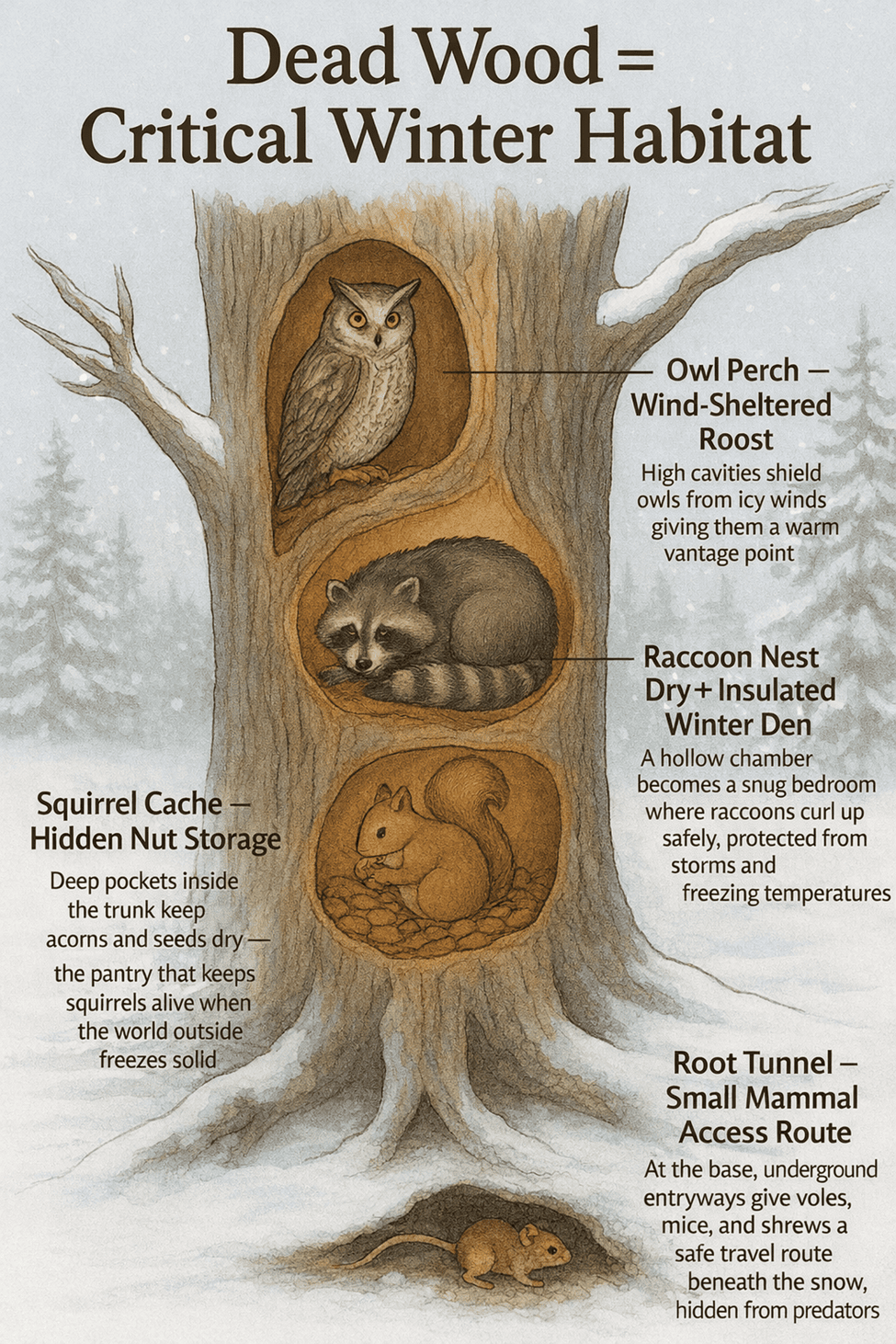
As Waterloo Region realtors, we often field questions from homeowners and buyers about dead or dying trees on properties. "Should we remove it?" "Is it dangerous?" "Does it hurt property value?" These are valid concerns, but before you reach for the chainsaw, consider this: what looks like "just a dead tree" from the outside is actually a fully-booked winter apartment complex for local wildlife.
🏢 Inside the Hollow Trunk: A Busy Community Surviving Winter
During harsh Waterloo Region winters—where temperatures can plummet well below freezing and snow blankets the ground for months—wildlife faces a critical challenge: finding shelter. Dead and hollow trees provide that lifeline. Here are some possible species tucked away in that standing dead tree on your property:
🦉 The Upper Floors: Owl Perch — Wind-Sheltered Roost
Great Horned Owls, Barred Owls, and Screech Owls use upper cavities to escape icy winds and watch the forest from a safe, hidden perch. These natural lookout posts are increasingly rare as dead trees disappear from our urban and rural landscapes.
🦝 Mid-Level Suite: Raccoon Nest — Dry + Insulated Winter Den
A hollow chamber becomes a warm, secure bedroom where raccoons curl up with their families and sleep through brutal cold snaps. These intelligent mammals need dry, protected spaces to survive winter—and dead trees offer exactly that.
🐿️ The Pantry: Squirrel Cache — Hidden Nut Storage
Deep pockets inside the trunk protect precious food supplies that squirrels depend on when everything freezes. Eastern Grey Squirrels and Red Squirrels both rely on these natural storage units to make it through lean winter months.
🐛 The Foundation: Insect Refuge — Overwintering Bark Layers
Beetles, moths, spiders, and countless tiny species shelter inside the thick, loose bark. These insects form the foundation of the entire food web—feeding the birds, small mammals, and other creatures that make Waterloo Region's ecosystem thrive.
🐭 Ground Level Access: Root Tunnel — Small Mammal Access Route
Underground entry points allow mice, voles, and shrews to escape predators and move safely under the snow. These tunnels create a protected highway system for the smallest members of our wildlife community.
🌲 Dead Wood = Critical Winter Habitat
While humans often see "danger" or "eyesore," wildlife sees the only shelter they have left. Removing every dead or hollow tree "for safety" eliminates the last natural winter homes for dozens of species trying to survive our harsh Canadian winters.
🏡 What This Means for Waterloo Region Property Owners
⚠️ Safety First, But Think Before You Cut
If a dead tree is near your home, power lines, or high-traffic areas, safety absolutely comes first
However, if it's standing in a back corner of your lot, away from structures, consider leaving it
Consult with a certified arborist to assess actual risk versus perceived risk
Many dead trees can stand safely for years, providing habitat throughout their slow decomposition
💰 Property Value Considerations
Buyers increasingly value properties with natural features and wildlife habitat
Dead trees in appropriate locations can be positioned as a unique natural feature
If aesthetics are a concern, strategic landscaping can frame dead trees as intentional habitat features
🤝 Compromise Solutions
Remove branches that pose actual hazards while leaving the trunk standing
Create "snags" by cutting trees to a safe height (10-20 feet) rather than removing them entirely
If removal is necessary, consider leaving large logs on the ground as ground-level habitat
Plant native trees nearby to create future habitat as they mature
🌳 The Bigger Picture: Waterloo Region's Urban Forest
As our Waterloo Region continues to grow, every patch of natural habitat becomes more precious. Dead and dying trees are part of a healthy forest ecosystem, yet they're often the first thing removed in urban and suburban settings. By understanding their value, we can help preserve critical winter habitat even as development continues.
📞 When to Call a Professional
Always consult a certified arborist for:
✅ Assessment of actual hazard risk
✅ Recommendations for safe habitat retention
✅ Professional removal when truly necessary
✅ Advice on creating wildlife snags from hazardous trees
⭐ The Bottom Line
If a dead tree isn't endangering your home, driveway, or outdoor living spaces—consider leaving it standing. It might be the only warm room left in the forest for the wildlife that shares our Waterloo Region community.
By understanding the hidden value of dead trees, you can make informed decisions that balance safety, property value, and environmental stewardship.
Have questions about wildlife habitat on properties you're buying or selling in Waterloo Region? Let's discuss how to balance safety concerns with environmental conservation. Together, we can help preserve the natural heritage that makes Waterloo Region special. 🌿
Kitchener-Waterloo Real Estate Blog Post: January 1, 2026